

AS/NZS 5601.2:2020 Clause 3.1.8
AS/NZS 5601.2:2020 clause 3.1.8 allows the use of a vapour barrier as an acceptable technical option to achieve separation clearance requirements within the controlled area.
Vapour barriers can be used to shield vulnerable areas from exposure to leaking gas, acting to separate gas concentrations from possible ignition sources. This is a recommended solution for current model vehicles with openable compartments in close proximity to gas cylinders.
In recognition that openable compartments typically in use in current industry products are likely to be significantly affected by the new controlled area application, Caravan Industry Association of Australia, in collaboration with its member State Associations, commissioned a gas flow modelling project to identify vapour barriers that could be used to shield openable compartments that would otherwise sit within the controlled area.
The vapour barrier design requirements are laid out in AS/NZS 1596.
LPG is heavier than air and does not dissipate. In the interest of safety we need to prevent the vapour from resting in the percentage range between the lower explosive limit and the upper explosive limit gas to oxygen ratio. In the event of a leak the vapour will hit the vapour barrier and fall, being heavier than air, and air movement will disperse the vapour.
In calculating the correct distance from an ignition source we use straight lines. For example, if the distance from the gas valve to the vapour barrier edge is 600mm, and the barrier edge to the locker opening is 600mm, each straight line measure is 600mm. Adding 600 and 600, the distance from the gas valve to the opening equals 1200mm.
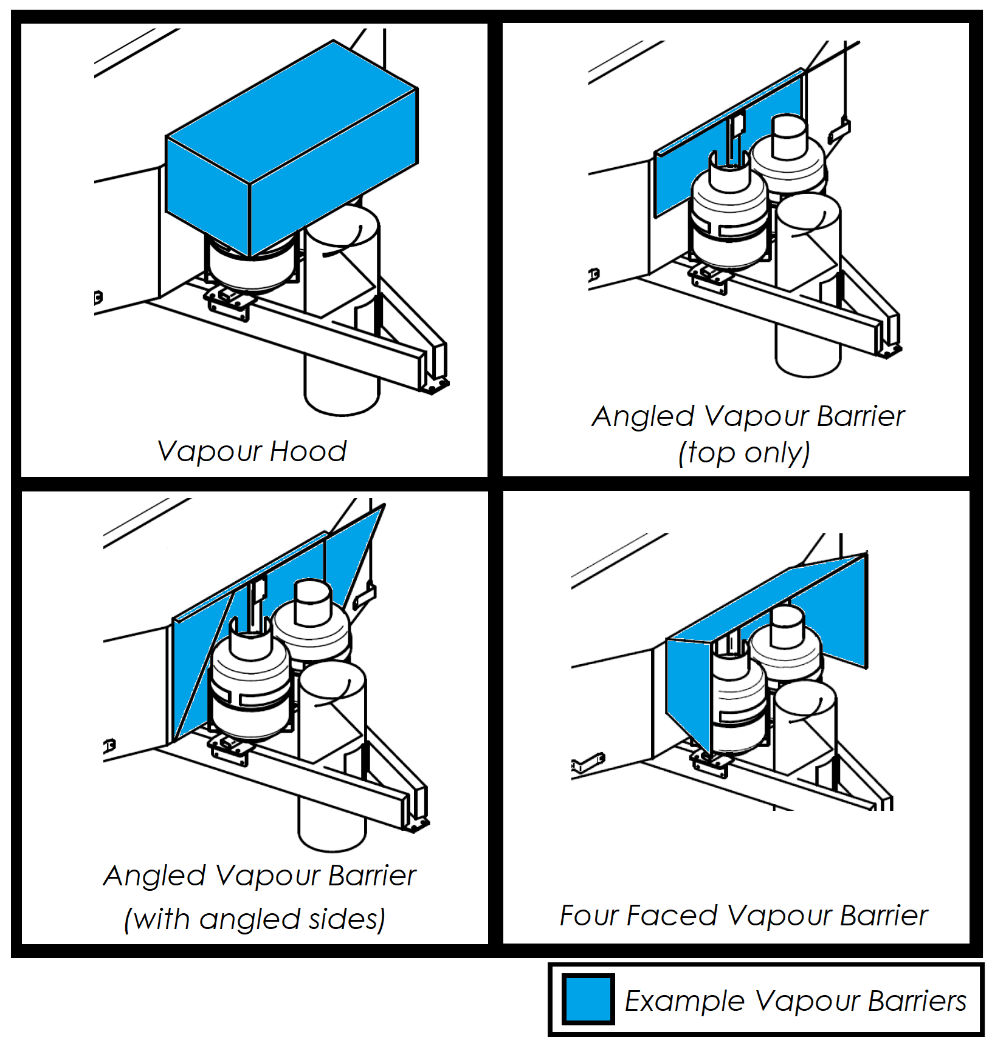
Example vapour barrier, arrangement one
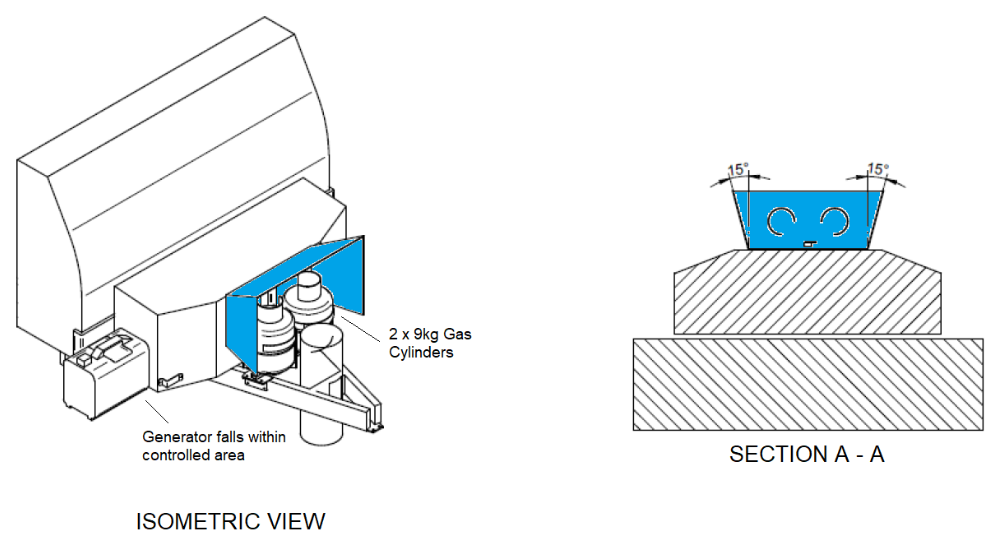
Example vapour barrier, arrangement two
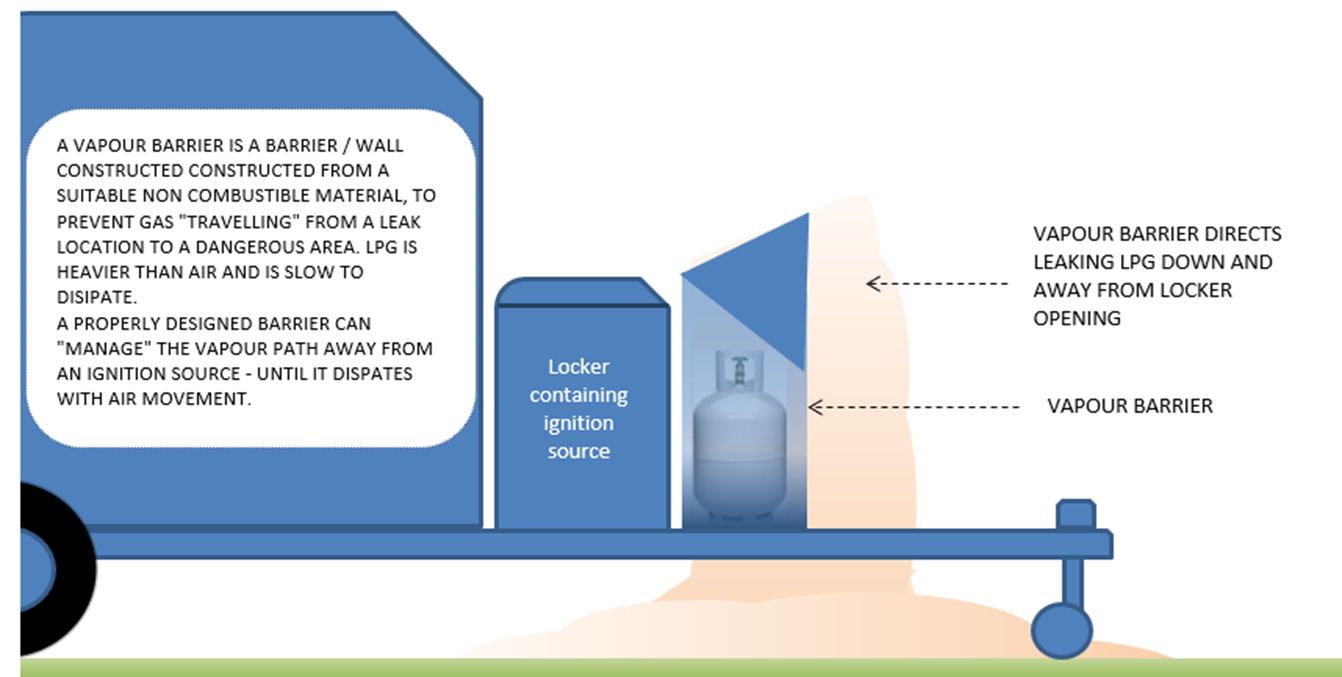
Vapour barrier modelling, view one
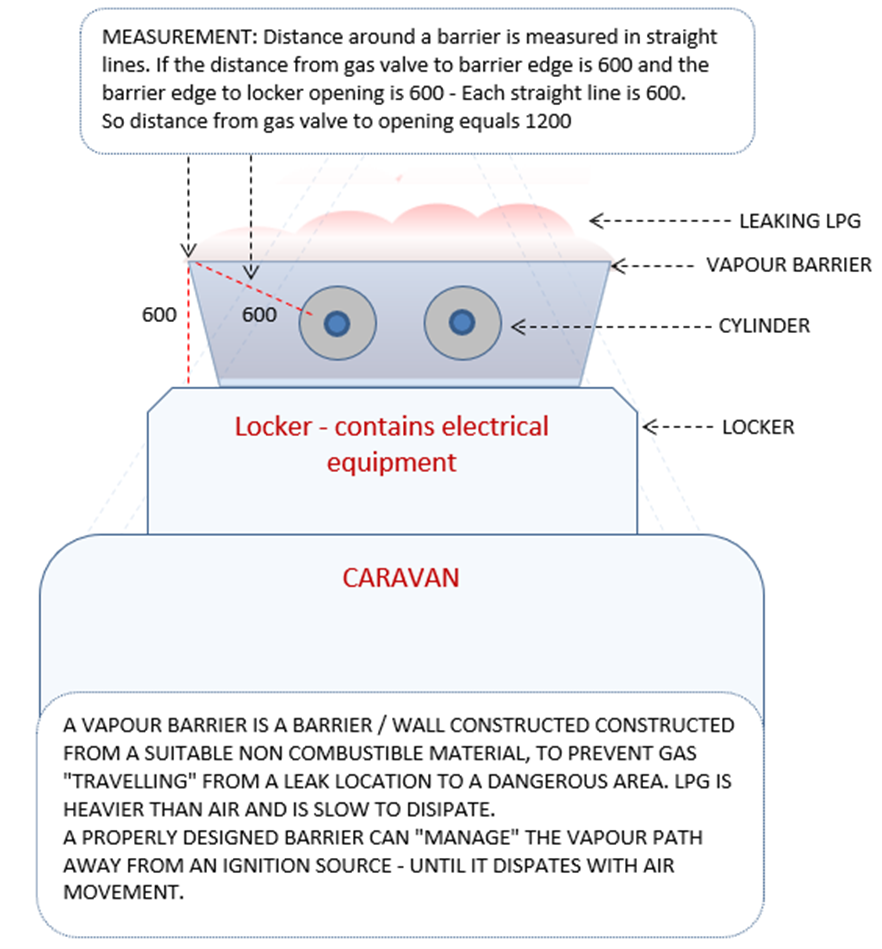
Vapour barrier modelling, view two
