

AS/NZS 5601.2:2020 Section 7
The requirements for ventilation of a recreational vehicle with a gas installation are found in AS/NZS 5601.2:2020 Section 7.
In any RV with gas appliances installed, consideration must be given to adequately ventilating the living spaces to prevent the build-up of condensation, products of combustion or other toxic conditions. Wherever appliances, including room-sealed ones, are installed within a living space, ventilation must be provided.
These ventilation requirements are in addition to vehicle standards requirements for openable windows. Refer to ADR 42.
Where an appliance is installed in a way that any part of the appliance is inside the RV, or an annex or tent, the total area of ventilation provided must be the greater of:
So, any space which has a gas appliance installed, including room-sealed appliances, must have vent openings with a total area that is at least 4000mm² or the value obtained from the formula, whichever is larger.
A small hybrid caravan is fitted with a bar fridge and small hot water service, both of which are room-sealed installations. This RV will be required to have a total open vent area of at least 4000mm². This could be achieved with two square or rectangular vents of at least 45mm by 45mm dimensions.
A caravan is fitted with several room-sealed appliances, for example a fridge and hot water unit, and an indoor gas cooker. The gas cooker is rated at 29MJ/h (8kW) and the RV has two sleeping berths. The calculation for ventilation area will be as follows:
Area = (610 × 29) + (650 × 2) = 18,990mm²
Since the calculated area is the larger figure, the required ventilation openings for this RV must be at least 18,990mm². This could be achieved with two square or rectangular vents of 100mm by 100mm dimensions.
The calculated ventilation area is to be understood as strictly a minimum requirement for safety, and exceeding the minimum calculated area where possible is recommended. These vent openings do not replace or reduce the amount of ventilation, by way of openable windows, that is required by road vehicle regulations.
For the purposes of vent size calculations, appliances in the following situations are not considered to be within the RV:
Louvres or mesh installed across the ventilation openings restrict the free area for air flow through the opening. In this situation, an increased opening area is required to compensate. As a guide, the area of the ventilation openings should be doubled to ensure sufficient free flow area is achieved.
Looking back to Example 1 above, if these two vents had fly mesh over the opening, an increase to a total area of at least 8000mm² would be necessary. This would increase the vent sizes to at least 65mm by 65mm each.
In order to allow a flow of air through the living space, ventilation openings must be located at a high-level and low-level position and must open direct to the outside. An enclosed annex or tent space is not outside for this purpose, so ensure that ventilation openings are outside any area that is enclosed, or has provision to become enclosed.
There must be at least two openings that are fitted at opposite ends or sides of the living space. If the living space can be divided, for example by a door, the openings must be in the same compartment as the gas equipment.
The high-level vent must be located no more than 150mm from the highest part of the ceiling. The low-level vent must be fitted as low as possible and no more than 150mm from the floor of the living space. The size of each of these vents must be at least half of the total required ventilation area.
Position of high-level and low-level ventilation openings
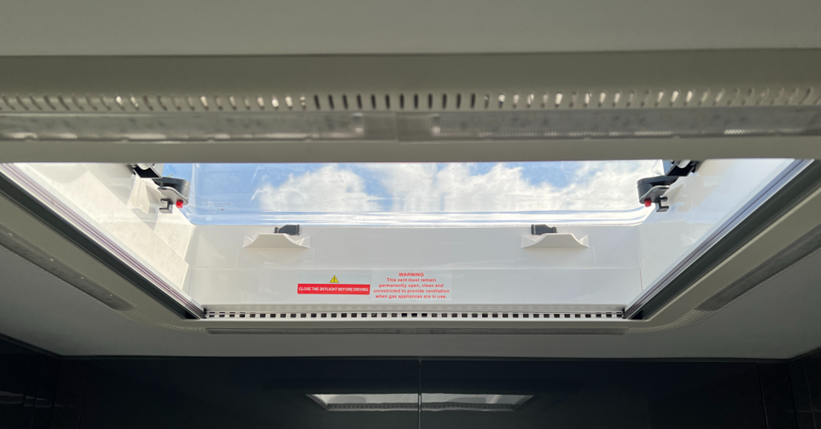
High-level ventilation openings can be in the form of a roof hatch if both of the following requirements are met:
If a roof hatch is used as the upper ventilation opening, it is important to obtain written confirmation from the component supplier confirming:
Each vent opening must have a permanent, legible warning label advising the user to ensure the vent remains open and clean. The wording and font size of the label are specified. Refer to clause 7.7.
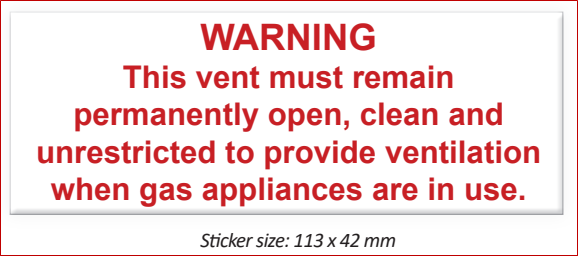
Vent warning label, catalogue item C-5D
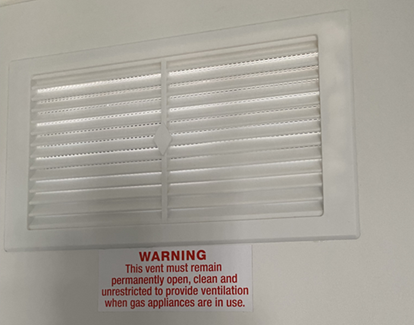
Ventilation warning sticker in position
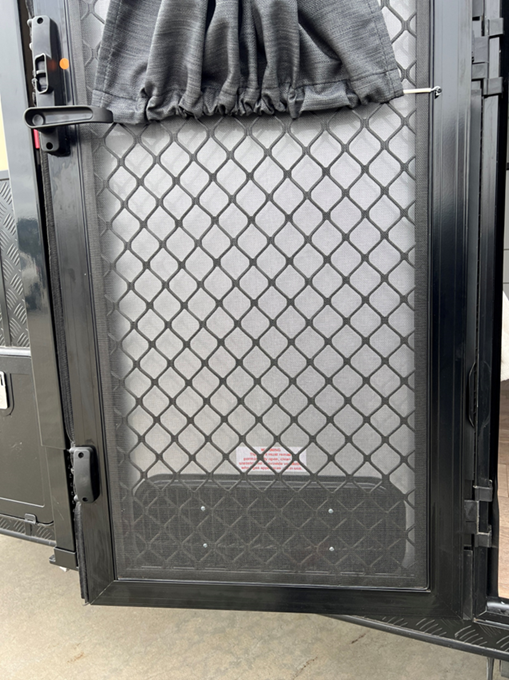
Ventilation warning sticker in position
A suitable label is available from the RV Merchandise catalogue, item C-5D. More details on mandatory gas warning labels, including the ventilation warning labels, can be found on the gas laws, labels and you page.
Amendment 2 of AS/NZS 5601.2, published in September 2024, introduces requirements for a lower vent that is covered during travel for such purposes as avoiding the ingress of water or dust.
If a lower vent is to be covered in this way, both of the following requirements must be observed:
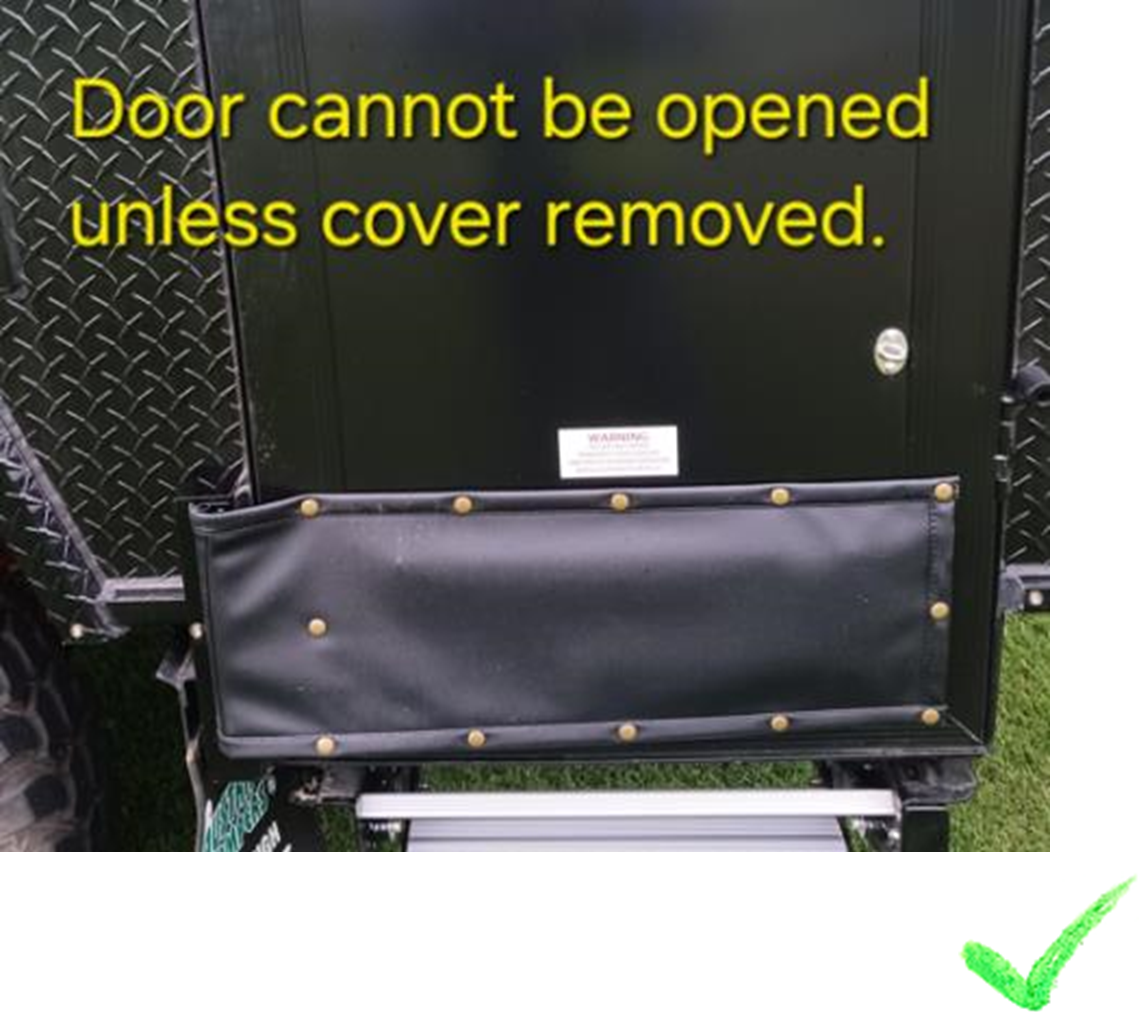
Lower vent opening cover, example one
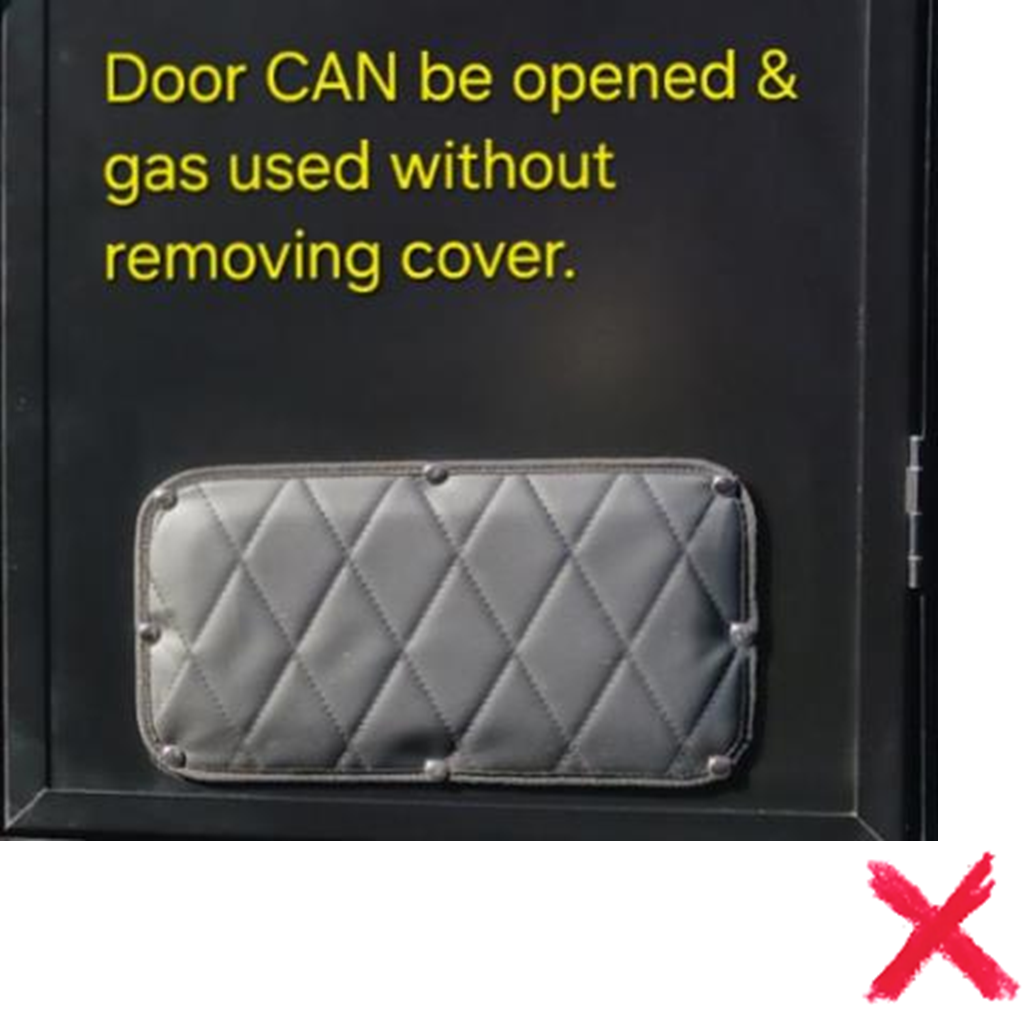
Lower vent opening cover, example two
