
Meet Alannah Hein: A true rising star
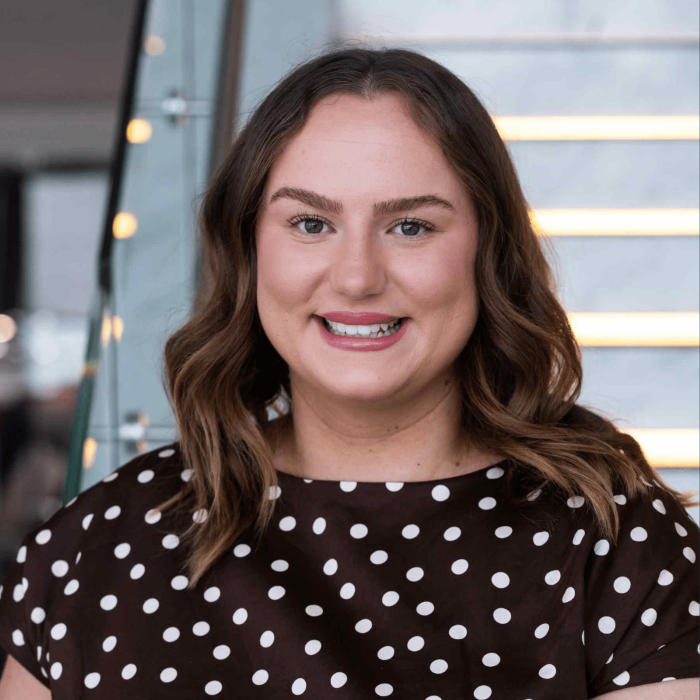
What started as a three-month job over the Christmas period has evolved into an award-winning career move for Alannah Hein.
In this interview, the inaugural recipient of the thl – Rising Star Award shares how a childhood spent growing up around caravan parks, an unplanned career pivot and a willingness to back herself led her to a dynamic dual role in the parks sector, and where she hopes to take the industry next.
Congratulations on winning the inaugural thl – Rising Star Award. What does winning this award mean to you?
Alannah Hein (AH): Thank you so much! It means a great deal to me, and it feels surreal to know I am the very first recipient. I am incredibly grateful to be recognised for the work I have put in, and it has motivated me to keep learning, contributing and making the most of every opportunity that comes my way.
I have been fortunate to work alongside people who have trusted my ideas, challenged me and supported my growth. I would not be where I am today without them.
More than anything, I hope this award shows others that you do not need your entire career mapped out from the beginning. Sometimes the opportunities you never planned for are the ones that lead you exactly where you are meant to be. You just need to be willing to take the chance, back yourself and put in the work once the door opens.
I am proud of what I have achieved so far, but I know I am only at the beginning of my career and that is what makes this recognition so exciting.
Great answer. So, what is your current role and what led you to where you are today?
AH: I currently wear a few different hats, dividing my time between SA Parks Association, where I work in sales and member support, and Revenue Creatures, where I assist with a wide variety of revenue, marketing and company projects.
My journey into the caravan and camping industry was not straightforward. In December 2022, I graduated from secondary school with a Certificate III in Early Childhood Education and Care, with every intention of building a long-term career in education, eventually becoming a childcare director and, further down the track, potentially owning a centre of my own.
Shortly after graduating, I became extremely unwell with glandular fever after constantly picking up illnesses while working in childcare, and was away from work for over six months. That experience forced me to question my career path. I returned to childcare for a time but that career path no longer felt the same.
In December 2024, I accepted a temporary position with Edwards Group, working in central reservations for Echo Holiday Parks. My mum jokingly mentioned the role to me, and I thought, “what do I have to lose?” I began the role believing it would last three months before I returned to education in some form. Little did I know I would completely fall in love with the caravan and camping industry and have no desire to leave it.
Because my parents had managed caravan parks while I was growing up, much of the role felt like second nature, and I understood far more about the industry than I initially realised. The next step was working out where my own skills, ideas and personality could fit within it.
I organised a meeting with the company’s CEO, where I openly expressed my ambitions and the value I believed I could bring. From that conversation, I secured a new part-time parks assistance role, before being offered the opportunity to join SA Parks Association part-time in sales and member support.
In March 2026, I commenced my current part-time role with Revenue Creatures while continuing to work three days a week with SA Parks Association. This dual-role arrangement definitely keeps me busy, but I would not have it any other way. I love the people I am surrounded by, the opportunities I have been given and the fact that not a single day looks the same.
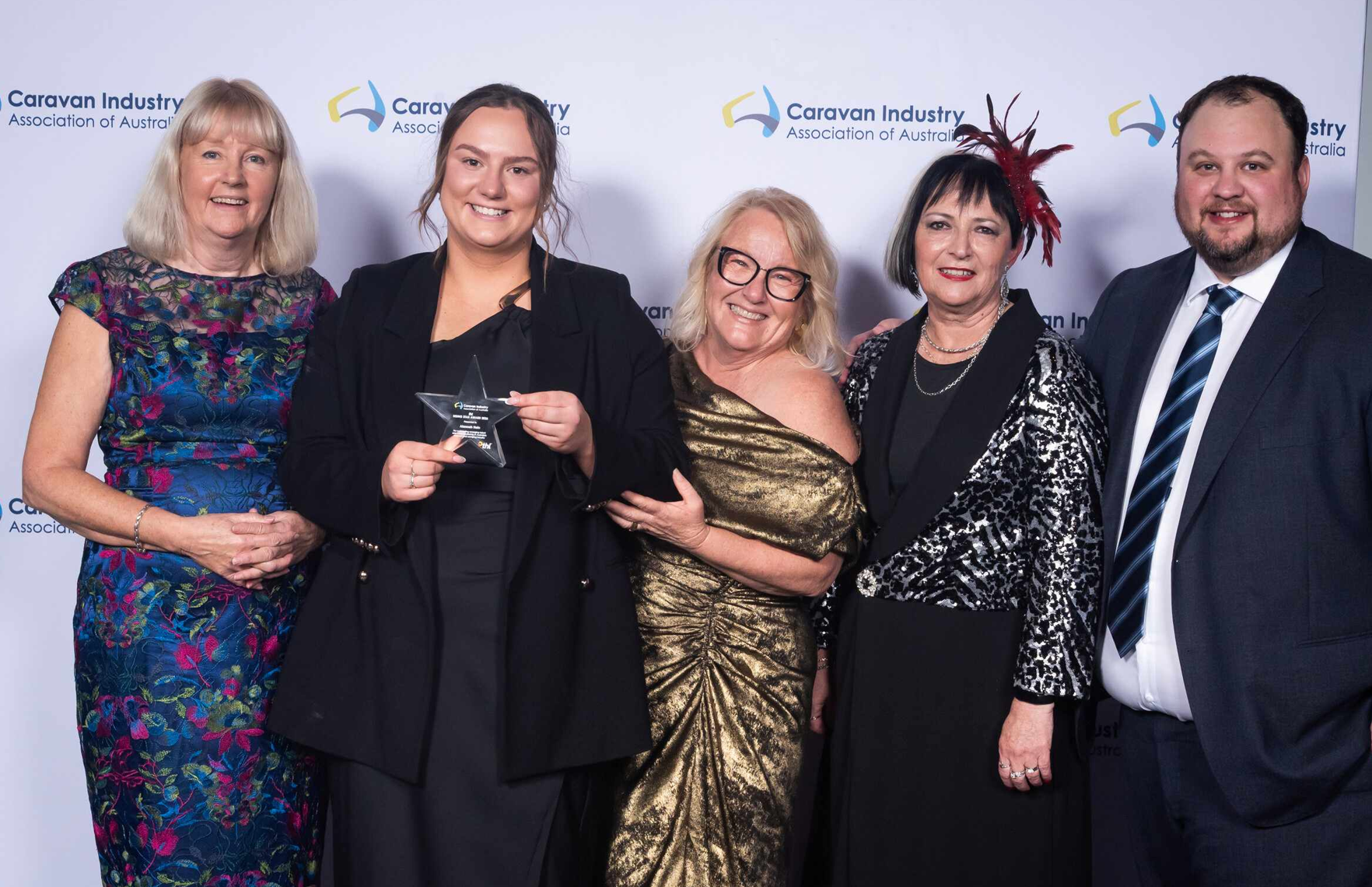
L-R: SA Parks CEO Fiona Williams, Alannah Hein, Jo Keown of Revenue Creatures, Caravan Industry Association of Australia Chair Donna Cocking and SA Parks Chair Stephen Edwards celebrate Alannah’s success at the 2026 Caravan Industry National Conference
As you mentioned, you come from a parks background. Has working in the industry given you a new appreciation for the sector?
AH: When I was younger, I imagined I might work in the industry one day, designing what I believed was the coolest caravan park imaginable on Minecraft. As I moved into my teenage years, that idea faded as I began to understand the cost of owning a caravan park, the heavy workload and the limited work-life balance that can come with operating one.
I then became genuinely passionate about early childhood education and, for a long time, did not expect to return to the caravan and camping industry at all.
What eventually drew me back was realising just how broad the industry actually is. Growing up around parks, I had mainly seen the operational side, but once I began working professionally across the broader sector, I discovered the enormous range of opportunities that exist behind the scenes, and that being part of the industry did not mean I had to own and operate a park myself.
What makes me want to be part of it is the people, the sense of community and the opportunity to make a genuine difference. It is an industry filled with hardworking people who care deeply about what they do, and there is something special about now working in an industry that was such a large part of my childhood. It was not always going to be my career path, but I genuinely believe that unexpected route is part of what makes me so passionate about it today.
What do you see as the biggest challenges facing caravan holiday parks at the moment, and what solutions do you propose?
AH: The caravan and camping industry, like the rest of the world, has been navigating a polycrisis for quite some time. Whether it is rising operational costs, changing consumer behaviour, staffing pressures, economic uncertainty or rapidly advancing technology, there will always be factors outside of our control. We cannot prevent every challenge, but we can control how we respond, and for me, that response begins with adaptability. The businesses that continue to adapt, innovate and embrace change will be the ones that remain successful.
The two challenges that stand out most to me in my day-to-day work are the rising cost of living and the successful integration of artificial intelligence.
With the cost of basic essentials continuing to place pressure on households, people are thinking much more carefully about where their money goes.
As parks continue to invest in larger cabins and premium facilities, I believe it is extremely important that they still maintain an affordable entry point. Not every area of a park has to deliver the same level of revenue.
Premium cabins may generate a greater portion of income, but simpler accommodation and site options can make travel possible for families, young people and lower-income earners who may otherwise miss out altogether.
There is also a longer-term opportunity in that approach. The guest who can only afford your most basic accommodation today may become part of your higher-spending audience in ten years’ time. Supporting affordability is not only about filling a gap in the market today, it is also about building trust, loyalty and future guests.
From an operational perspective, another major challenge is learning how to integrate artificial intelligence efficiently and effectively into everyday work. Twelve months ago, much of the conversation focused on reassuring operators that AI was not something to fear, that it could support them in their roles and reduce repetitive tasks rather than take their jobs. I believe we have made strong progress in changing that perception, and the next step is showing people exactly how to use it.
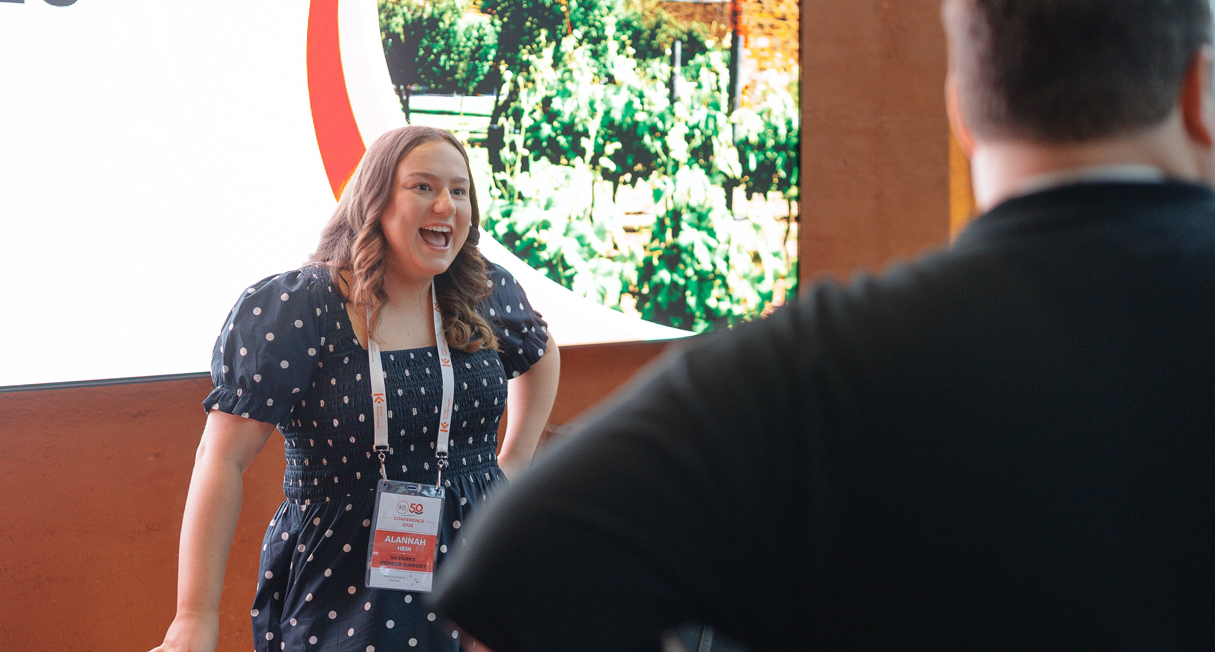
Alannah has played a key role in improving member support at SA Parks
Is there anything about the industry you wish more people understood?
AH: I wish more people understood that there is so much more to the caravan and camping industry than a powered patch of grass and a four-walled cabin. It is an industry that is constantly evolving.
What many people now view as the basic caravan park experience would have been considered a luxury 20 or 30 years ago, when you were lucky to have grass on your site rather than dirt, let alone access to power. When cabins first began appearing in parks, people said, “that’s not camping.” Before that, similar things were said about caravans, tents and even enclosed swags. Every new stage of the industry has challenged someone’s idea of what camping is supposed to look like.
That is what I find so inspiring about this industry. It is constantly changing, and the people within it continue to adapt and find new ways to meet the needs of travellers, who now range from traditional campers and caravanners to families, couples, workers and long-term travellers. The industry also contributes significantly to tourism, regional communities and the wider Australian economy, yet it doesn’t always receive the recognition it deserves for being as innovative, resilient and complex as it is.
I wish more people could see the scale of what this industry provides, how far it has come and the amount of work that goes into continuing to move it forward. It deserves far more credit than it is often given.
On that note, what excites you most about the future of the industry, and what role do you hope to play in shaping its success?
AH: What excites me most about the future of the caravan and camping industry is seeing how it will continue to evolve for newer generations, particularly Gen Z and Gen Alpha.
Guest expectations are already changing, and I think the industry has an exciting opportunity to explore new ways of communicating and capturing attention. Younger generations are looking for more than somewhere to sleep, they want experiences that feel personal, memorable and worth sharing.
At the same time, I believe it is incredibly important that the industry does not lose its core, the sense of community and connection should never disappear in the effort to modernise.
That is where I hope to play a role. I want to help bridge the gap between newer generations and the existing foundations of the industry, drawing on both my understanding of my own generation’s expectations and my appreciation for the people and values that have shaped the industry into what it is today.
 Copyright © 2023