

The approval process for motorised recreational vehicles
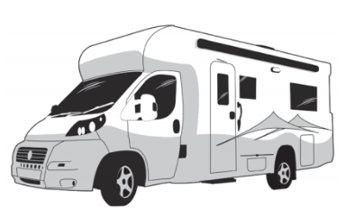
Motorhomes under the Road Vehicle Standards Act
Second stage of manufacture involves modifying or adding to a new vehicle, the base vehicle, to create an alternate vehicle such as a motorhome. Under the RVSA, type approval holders can modify base vehicles that are on the Register of Approved Vehicles and base vehicles fitted with a Motor Vehicle Standards Act 1989 identification plate.
Note: MVSA approval holders cannot fit an identification plate to a base vehicle that has been added to the RAV.
Under the RVSA, all motorhomes, either as an originally built motorhome or as a second stage of manufacture to a completed or base vehicle, provided to the Australian market for the first time must be entered into the Register of Approved Vehicles. For a motorhome to be recorded in the RAV, manufacturers and importers must obtain a vehicle type approval for their vehicle type. More information about importing motorhomes is available.
In the guidance note released by the Department, a road vehicle is considered to have been provided to a consumer for the first time when the following conditions have been met:
No. A vehicle type approval may be issued for a motorhome, either as an originally built motorhome or as a second stage of manufacture to a completed vehicle. An application for a type approval for second stage of manufacture can only be made using one base vehicle. Therefore, separate applications are required for each different base vehicle approval.
When completing a second stage of manufacture application, you will be required to use a unique make and model combination, different from the base and other approved vehicle types.
All applications for approvals are managed through ROVER, the Road Vehicle Regulator, which is the Department’s administration system for the Road Vehicle Standards Act 2018. ROVER provides a single integrated system for all approvals and activities under the Road Vehicle Standards legislation, allowing you to:
The RVS legislation allows the Department to refuse to consider applications in certain circumstances. Refusing to consider an application means the application is closed without either granting or refusing to grant the requested approval. A guide released by the Department sets out why the Department may refuse to consider an application, how to avoid that happening and what you can do if the Department refuses to consider your application.
The Authority to Act within ROVER allows an organisation to have multiple tiers of authority to represent the organisation. Multiple tiers are able to represent the organisation for any application or approval request, or for recalls, and are able to see any information pertaining to that organisation contained within ROVER. More information and requirements can be found in the Authority to Act in ROVER section.
A video providing guidance on how to add design and manufacturing facilities within ROVER can be found under Videos. Further information about ROVER, including how to create an account, can be found on the Department’s ROVER resources page.
To be eligible to apply for a new vehicle type approval, the applicant must be able to demonstrate they fulfil all of the relevant eligibility criteria. The eligibility criteria are quite strict, to ensure approval holders have the necessary skills, capabilities and business arrangements in place to consistently build compliant vehicles. The eligibility criteria include, but are not necessarily limited to:
The vehicle type approval applicant must retain all relevant information to support their application.
More information on fees and charges can be found in the Department’s fees and charges document. A video providing guidance on how to use a UN approval in ROVER to demonstrate compliance with the ADRs can be accessed under Videos. More information about second stage of manufacture and vehicle type approvals can be found on the Department’s Vehicle Type Approvals webpage.
The RVSA introduces a requirement for new vehicles to carry a Secure Vehicle Identification marking. This replaces the previous identification plate requirements of the Motor Vehicle Standards Act.
To implement these changes, Australian Design Rule 61/03, Vehicle Marking, has been updated to include the requirements for Secure Vehicle Identification as formal identification for new vehicles supplied to market under the RVSA.
The Secure Vehicle Identification will appear in two different forms within recreational vehicle industry manufacturing, depending on the type of vehicle. For more information on these changes, see the the Department’s guidance on ADR 61/03, Vehicle Marking.
Two of the key elements to obtaining a vehicle type approval are to demonstrate compliance to the relevant ADRs and conformity of production. Both of these elements will need to be completed before you can finalise your type approval application. These elements must remain a part of your business systems once you have transitioned to the RVSA, and will need to continue to be updated and treated as living documents within your business.
Vehicle type approvals will cover all ADR-related aspects of the motorhome. The Department has an ADR Applicability Summary for Goods Vehicles, N category available on its website. This is a useful reference document for manufacturers and importers in determining which ADRs apply to the motorhome they are providing to market.
Businesses will also need to consider which ADRs relate specifically to the type of motorhome being provided to market.
The vehicle type approval applicant must hold evidence demonstrating compliance to the relevant ADRs. All relevant documentation and evidence to support full ADR compliance will need to be obtained and kept up to date. Evidence of ADR compliance of some components that require testing, for example strength requirements and light intensity, will need to come from an approved testing facility. More information can be found on our Approved Testing Facilities page.
For guidance on the ADRs and expected detail of evidence to support compliance relevant to motorhomes, see ADRs Relevant to Motorised Vehicles.
Another key element of being eligible to obtain a vehicle type approval will be your ability to prove you have adequate control over all stages of design, componentry and manufacture of the motorhomes you are producing or supplying. In other words, you will need to have some form of Quality Management System in place to demonstrate that you have effective control on conformity of production.
Departmental guidance material on Quality Management System requirements can be found on the Department’s QMS page.
Applicants may choose to withdraw an application for any reason, and do not need to give a reason for the withdrawal. Sometimes, rather than refusing, or refusing to consider, an application, the assessor will suggest the applicant withdraw, amend and strengthen their application by including additional information or supporting documentation.
It is up to the applicant whether they wish to:
To know how to withdraw, amend, resubmit and delete an application in ROVER, see the Department’s guidance material.
You may request to withdraw an application with a status of Paid, awaiting assessment, or Assessment in progress, in your ROVER portal.
The critical points after which your application cannot be withdrawn are:
When the Department receives notice to withdraw an application that has not already been decided, it will:
When the status of the application is updated to withdrawn, the applicant or authorised user may either:
If an amended application is submitted, the timeframe to decide the application will start again, as it is considered a new application.
Under section 72 of the Road Vehicle Standards Act 2018, the delegated decision-maker may refund the whole or part of an application fee if they are satisfied there are circumstances justifying the refund.
However, section 230(A)(3) of the Rules provides that any fees paid for a withdrawn application are not refundable if the Department had begun considering the application before it was withdrawn. It is therefore not expected that the relevant application fee will be refunded in many cases.
To request a refund, contact the Department using the online enquiry form and explain in detail the circumstances that would justify refund action.
